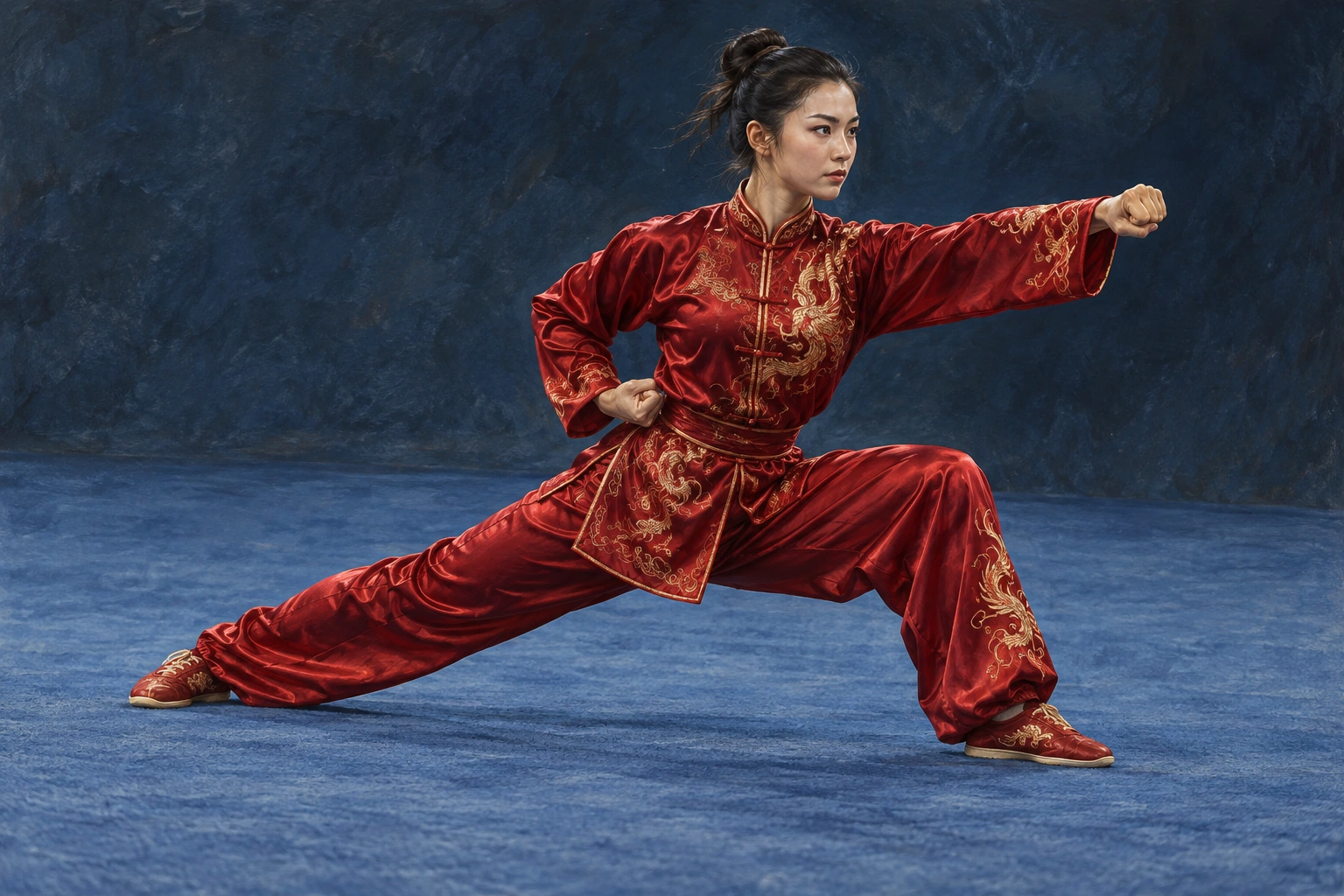
Three scores within one routine
A spectacular jump catches the eye, but it does not tell the whole story. For taolu events with difficulty scoring, the 2024 IWUF rules divide a base score of ten between movement quality—five points—overall performance—three—and difficulty—two. The federation implemented these rules on 1 January 2025. Specific innovation bonuses also exist, so ten describes the basic structure rather than every possible scoring situation.
What each judging group observes
Group A deducts technical and other execution errors. Group B assesses the whole performance: power, coordination, rhythm, choreography and expression of style, alongside music where applicable. Group C checks whether difficulty techniques and their connections meet the requirements. Within those two points, techniques contribute up to 1.4 and connections up to 0.6. Attempting a difficult element is not enough to have it recognised.
Different events use different formulas
Events without difficulty scoring, including duilian and group routines under these rules, allocate seven points to movement quality and three to overall performance. Before comparing two scores, check the event category and the regulations named in its programme. An impressive clip without that information leaves out an important part of the context.
A more rewarding way to watch
Try watching a routine twice: first follow its changes of rhythm; then observe how each movement finishes and connects with the next. The point is not to become an armchair judge. It is to appreciate the control between spectacular moments, and to understand why two performances that look similar at first glance can receive different marks.