Look at the whole day
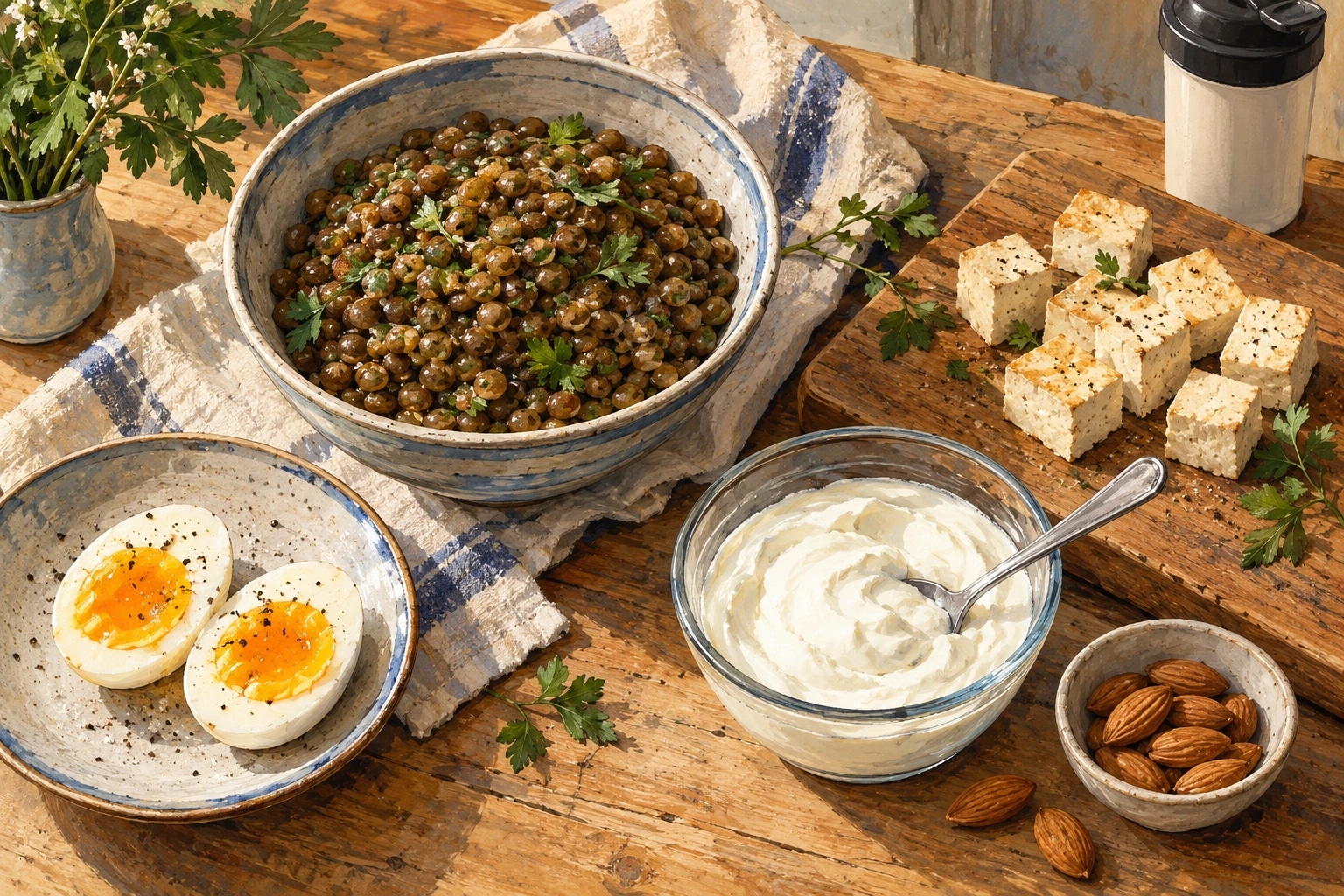
Before comparing tubs, take a look at what you already eat. The NIH Office of Dietary Supplements notes that protein supports muscle maintenance and repair and can come from ordinary foods: eggs, dairy products, fish, meat, beans and nuts. A supplement can help fill a gap, but purchasing one does not establish that a gap exists. Write down a typical day’s meals first; include portions and snacks, not just the food you eat immediately after training.
What the research actually measured
Morton and colleagues’ systematic review, published in the British Journal of Sports Medicine, combined 49 studies involving 1,863 participants. In healthy adults undertaking resistance training, additional protein improved average gains in strength and fat-free mass. That is evidence for a possible contribution alongside training, not a promise about a particular brand or an individual transformation.
Their analysis estimated a plateau in additional fat-free-mass gains around a total intake of 1.6 grams per kilogram of body weight per day. This includes food and supplements together. The estimate carries uncertainty and is not an exact threshold for every person, a safety ceiling, or an instruction to consume that amount.
Buy for a clear purpose
A useful question is whether a shake solves a practical problem: a meal you cannot conveniently prepare, or a protein shortfall identified after reviewing your diet. Compare the actual protein per serving, ingredients, allergens and cost, rather than the size of the container. Food still contributes other nutrients and variety.
For someone training recreationally, reviewing consistent training and regular meals is a sensible starting point. If you need an individual target, especially with a medical condition or a restricted diet, a qualified dietitian can assess it. More powder is not automatically more progress.