A phase worth watching
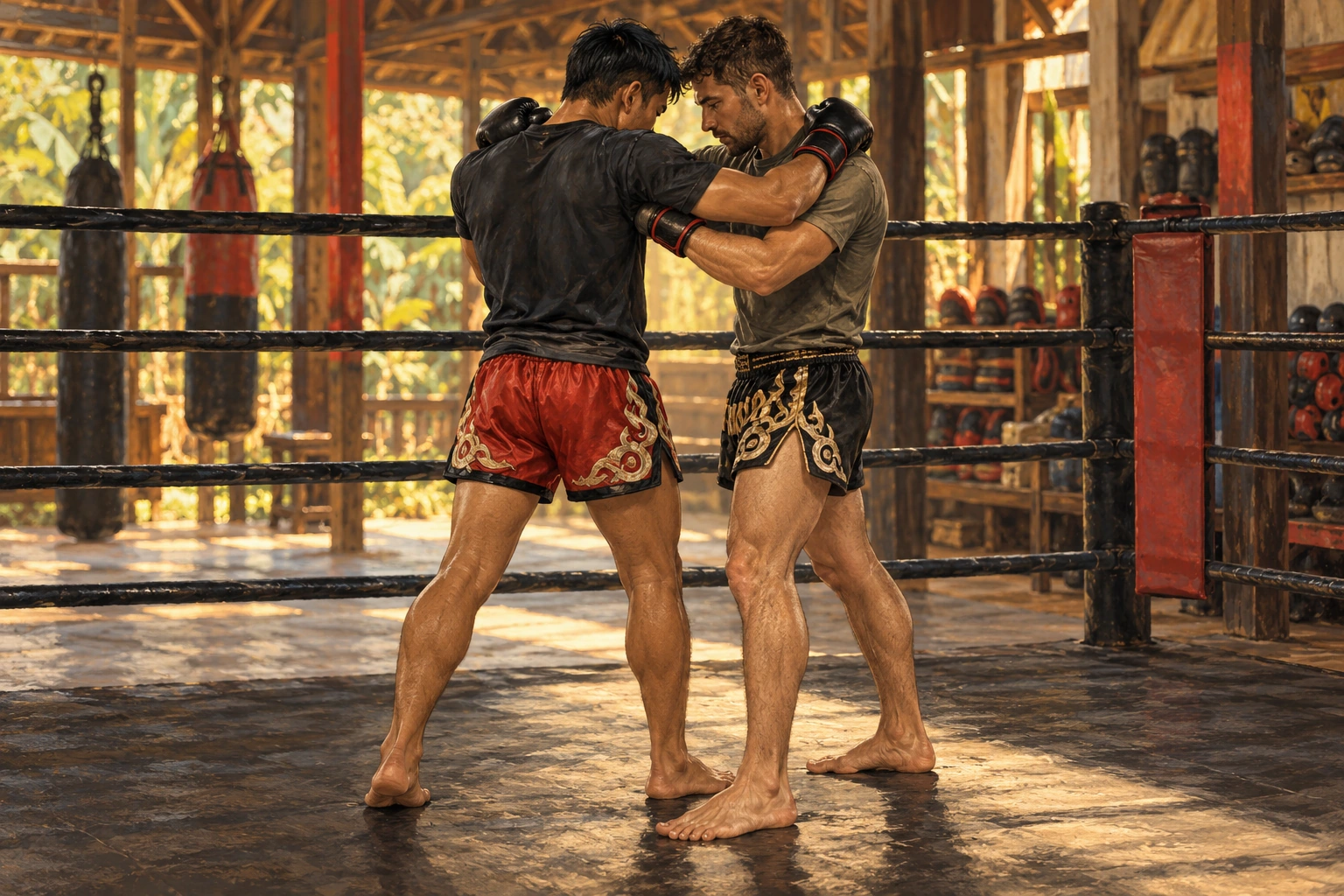
Two fighters close the distance and remain connected through their arms and upper bodies. That is the clinch: an exchange that can look static on a first viewing, yet asks a useful question of the spectator. Who can create room for a legal strike while preventing the other person from doing the same? Watching only the gloves can hide much of this contest.
What the IFMA rules actually reward
The IFMA rulebook revised on 11 May 2026 recognises punches, kicks, knees and elbows as scoring skills when they satisfy its conditions. Holding a position is not itself one of those strikes. Rule 29.2.2 also excludes throwing an opponent without striking from scoring. A dramatic loss of balance and a scoring action should therefore not automatically be treated as the same thing. These are IFMA rules; another promotion may apply a different framework.
Listen to the separation command
Under rule 26.3, YAEK is the referee’s command to break a clinch. Both athletes must step back and await the instruction to continue. Separation does not, by itself, tell you who won that exchange. It is part of the referee’s management of the bout. Follow the sequence before and after the command instead of judging it from a single frozen image.
A useful exercise for the next bout
Replay one short exchange twice. First follow the feet, posture and changes of position; then follow the attempted strikes and their targets. Keep observation separate from a final scoring verdict. If you practise, ask your coach to explain the rules used in your class and competition. Controlled partner work belongs under qualified supervision: copying a forceful neck pull from a highlight is a poor substitute for learning the position.