One name, many traditions
When someone says they practise kung fu, we still do not know exactly how they train. The International Wushu Federation describes traditional wushu, commonly called kung fu, as a diverse collection of practices shaped by different geographical, cultural and family settings. Some emphasise hand techniques; others focus more on legs, throws or traditional weapons. The label embraces that variety rather than turning every school into the same discipline.
What a form shows
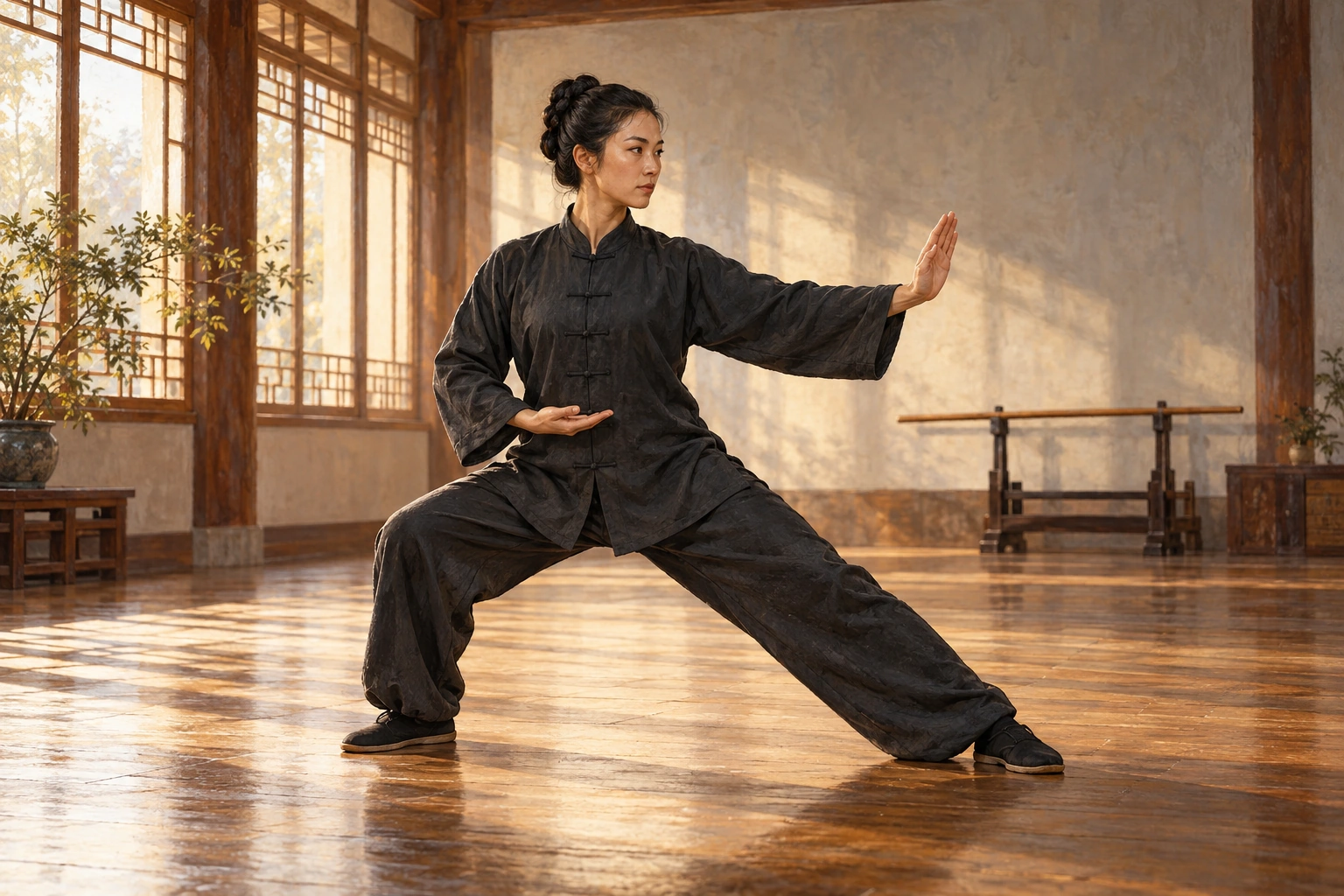
A form connects movements in a sequence. In competitive taolu, the IWUF describes routines combining stances, footwork and techniques, assessed through criteria such as movement quality, overall performance and difficulty. Watching a routine is different from watching an unrestricted exchange with an opponent. Nor does one routine summarise everything a traditional school teaches: ask how its forms connect with the rest of its training.
Where sanda fits
The IWUF presents sanda as a modern combat sport developed from Chinese martial arts. It includes punches, kicks, throws and defensive actions within its rules. Taolu and sanda therefore demonstrate different practice and competition formats. Excelling at one does not automatically establish every ability required by the other. To understand a demonstration, first identify what is being practised and under which conditions.
Three questions for a school
Look beyond the term kung fu. Ask which tradition the school teaches, what happens in an ordinary class and how students work with partners. Then compare the answers with your interests: learning forms, competing, exploring a tradition or building a lasting practice. A film scene cannot replace that conversation. Understanding the differences helps you appreciate each approach without expecting every school to look alike.