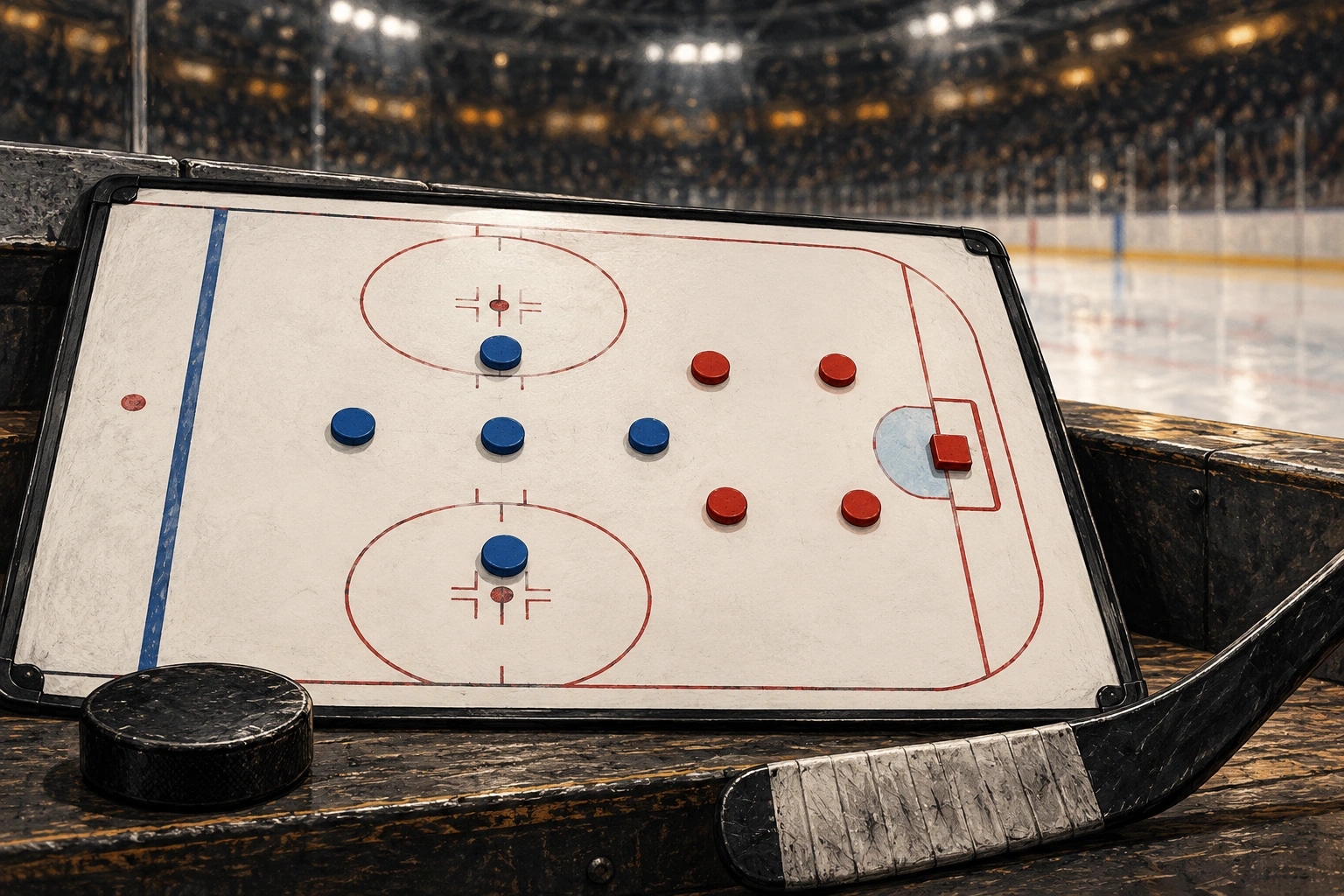
An extra player creates a problem to solve
Edition of 18 October, published on 19 October 2026.
A power play gives a team a numerical advantage because of an opposing penalty. Five skaters against four is a familiar example, with the goalies counted separately. The advantage does not guarantee an open shot: the defending group can still protect the middle, block lanes and force play toward the outside. The useful question is not simply who has the puck, but where the next usable space might appear.
Movement needs information
Hockey Canada's coaching material links puck and player movement with creating time and space. Its guidance on scanning also emphasises identifying teammates and the direction of defensive pressure. Applied to watching a power play, that suggests looking beyond a sequence of passes. Does the receiver have an option ready? Does a defender turn, shift or leave a lane? Moving the puck without changing the defensive picture can consume possession without creating a better chance.
Try this during the next broadcast
For one power play, follow a single defender for several seconds instead of tracking every pass. Watch how that player adjusts to the puck and the attackers away from it. Then look for the moment an attacker can shoot, pass through a gap or reach a rebound. This is a viewing exercise, not a claim that every team should use one formation. The aim is to recognise purposeful movement, including the moment when another pass is less useful than taking the available shot.