What crosses first
Rule 83 in the 2026–27 IIHF and NHL rulebooks establishes the basic idea: attacking players must not enter the attacking zone before the puck. The reference is that zone’s blue line, not the centre red line or the position of the last defender as in some other sports.
To follow a zone entry, look first at the puck and then at the skate blades of the puck carrier’s teammates. A head, shoulder or stick being further forward does not settle the decision on its own.
The moment that matters
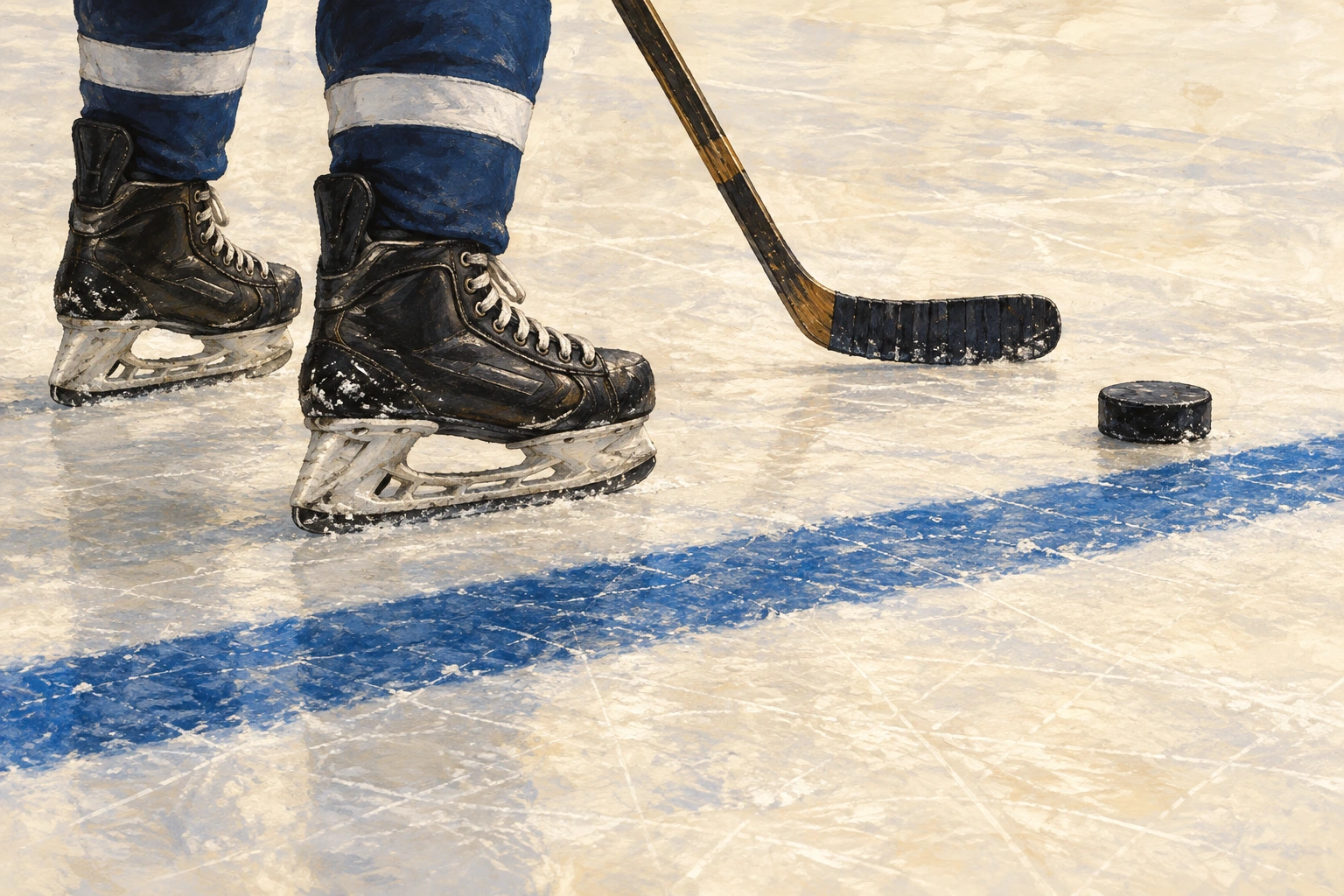
The comparison is made when the puck completely crosses the blue line’s leading edge into the attacking zone. For this rule, the skate means its blade. A blade that has not yet crossed the relevant vertical plane can keep a player onside; it does not always have to touch the ice.
Picture a winger waiting near the line while a teammate advances with the puck. The question is not whether the winger looks ahead in an arbitrary photograph, but where the blades were at that precise moment. The puck carrier has a specific possession-and-control exception, described in the rulebook.
Why the whistle sometimes waits
An official can signal delayed offside with a raised arm, allowing attackers to clear the zone without joining the play. Once everyone has cleared it under the rules, they may enter again. Attempting to play the puck or pressure the defender during that situation can cause a stoppage.
Clearing a delayed offside has its own requirements; do not simply apply the entry explanation about a vertical plane to that reset. When learning by watching a game, follow a complete entry, find the official’s signal and watch the attackers return. This introduction does not cover every exception or every hockey ruleset.