A name that can mislead
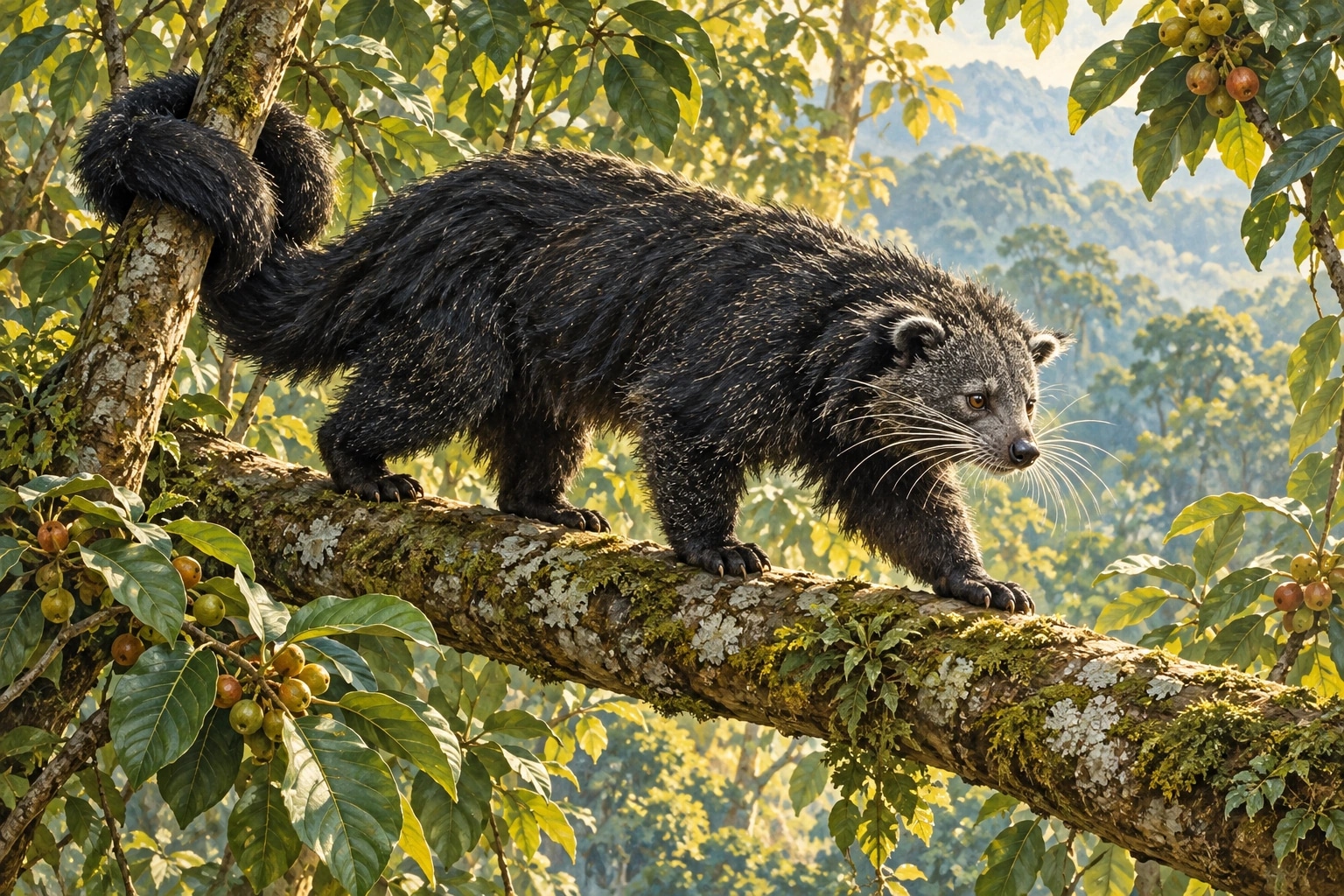
The binturong, Arctictis binturong, is sometimes called a bearcat. That nickname describes an impression, not its family: it is a viverrid, related to civets rather than a kind of bear or cat. Its dark shaggy coat, pale whiskers and long tail make an unmistakable silhouette. San Diego Zoo and the Smithsonian describe a mammal adapted to the tropical forests of South and Southeast Asia.
The tail is part of the route
A prehensile tail can grasp. For a binturong negotiating branches, that means an additional point of support alongside its feet. The Smithsonian describes a bare, leathery area near the tail tip that helps provide traction. Watching how the animal transfers its weight tells you more about this adaptation than simply calling the tail a decoration.
Its low, muscular body and short legs are also part of the picture. It spends much of its time climbing and resting above ground, where secure contact with a branch matters. The tail helps with balance and movement; it does not turn the animal into a monkey.
A carnivore that eats plenty of fruit
Here, Carnivora is the name of a biological order, not a promise that every meal is meat. Fruit forms a large part of the binturong’s diet, although it also eats animal foods. San Diego Zoo highlights another consequence: seeds from eaten fruit can be dispersed through droppings. Moving through the forest can therefore connect a feeding site with a new place for a seed.
The species behind the character
Stranger Animals gives unusual species a fictional visual personality. The living binturong deserves a separate look: its grasping tail, feeding habits and forest habitat are remarkable without invented powers. Our cover is an original illustration of those features. Learning the animal’s real name is a good first step toward seeing more than an unusual face.